
The city's leak guide starts with the everyday culprits
The City of Midland's leak guide calls out silent toilet flappers, irrigation, service lines, softeners stuck in backwash, and reverse-osmosis systems that keep sending water to the drain. That is why a good home inspection begins with a water-use history and shutoff test, not a guess about what is under the slab.
Dye-test the toilet
Color placed in the tank that appears in the bowl without a flush indicates a leaking flapper or flush valve.
Watch the meter
When all water use is off, a moving low-flow indicator suggests water is still passing the meter. Isolating the house helps narrow the side of the shutoff.
How we narrow a concealed home leak
Confirm the meter reading, identify scheduled uses, and check toilets, faucets, hose bibbs, water heater relief discharge, and appliance connections.
Separate house plumbing from the meter-to-house line when the shutoffs allow it. Test suspect fixtures or branches before considering a slab or wall opening.
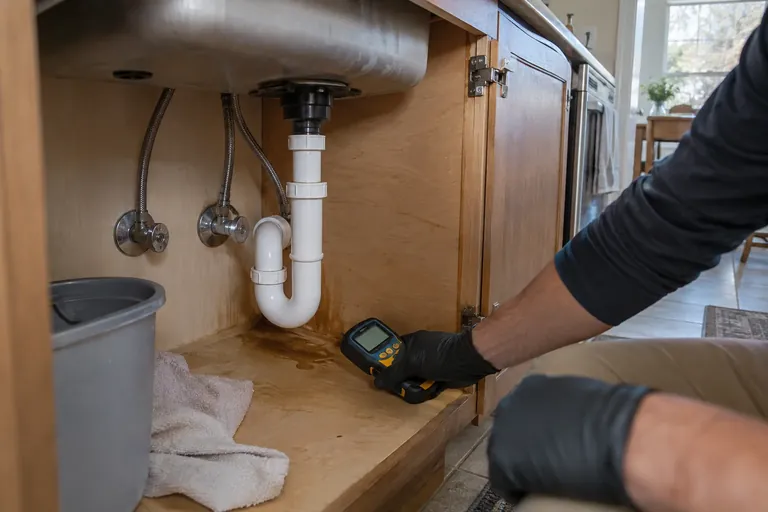
Use moisture readings, pressure observations, and acoustic or thermal methods where appropriate, then explain repair access and alternatives.
Check the softener before opening a floor
If overnight meter use suggests a slab leak but a toilet dye test is negative, check whether the softener is cycling to drain. Isolating that appliance may change the meter reading and point to a softener repair rather than a floor opening.
If the line is outside the home
A meter that continues to register use after the house shutoff is closed can point to the private service line or an outdoor branch. We can assess the private side; a leak at the meter box or city-owned infrastructure should be reported to the City of Midland through its official utility channels. Any excavation must be preceded by utility locating.
See underground line detection →Wall leak detection in Midland homes
A spreading stain, peeling paint or swelling baseboard can help identify where moisture is appearing. Record whether it follows a shower, an appliance cycle or rain. The visible mark may be some distance from the source, so describe the pattern before arranging a wall opening.
Ask the inspecting provider how visible fitting checks, moisture readings and plumbing isolation will be used to narrow the cause. If the clues instead include warm flooring or water beneath floor coverings, review the slab leak inspection guide.
Hot-water leak symptoms: explain what changed
Tell the provider about warm floor areas, visible moisture near hot-water fittings, an unfamiliar running-water sound or a change in hot-water use. These are clues to investigate, rather than a diagnosis of a pipe beneath the slab. Note the room and whether the pattern changes when fixtures are used.
Keep the latest bill and any meter readings available. Ask whether the inspection will cover visible water-heater connections and concealed hot-water lines, what access is needed, and whether locating the leak is priced separately from repair.
Water supply leaks and drain or sewer leaks need different checks
The water meter records incoming water use. Explain whether moisture appears while everything is off or when a sink, shower or appliance drains. Report recurring backups, drain odors and the affected fixtures separately from a high water bill. A stationary meter alone does not rule out a leak in a drain.
Ask whether the available provider handles your particular supply, drain or sewer concern and which inspection is appropriate. If meter movement continues with the house supply isolated, also review private underground water-line checks. Share the symptoms when you call (432) 263-5094.
Local reference
The City of Midland Leak Detection Guide describes toilet, irrigation, service-line, softener, and RO checks. Its meter guidance is a useful starting point before an inspection.
Residential leak questions
Let the meter reading guide the next step.
Tell us what changed on the bill and what happened when you closed the house shutoff. We will start with the most likely sources.
Call (432) 263-5094