
Evaporation, overflow, or an actual leak?
The EPA recommends a 24-hour bucket comparison on a calm, rain-free day with the pool closed and automatic fill turned off. If the pool level falls farther than the bucket water, investigate a leak. In Midland, a windy afternoon can skew a quick guess; repeat a questionable test under steadier conditions.
Pool drops only with the pump running
Return-side piping, equipment connections, and some water features move higher on the inspection list.
Pool drops with the pump off
A shell fitting, static pipe section, suction line, or overflow path may need isolation. The pattern is a clue, not a diagnosis by itself.
The plumbing circuit is tested in sections
Visible first
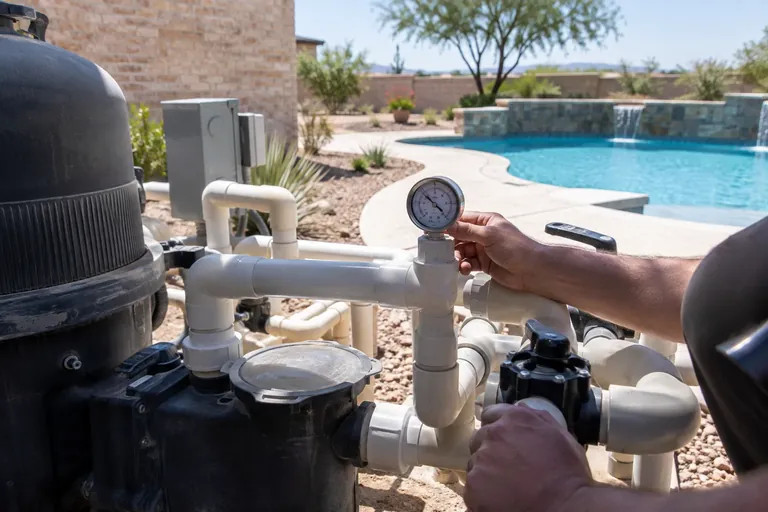
Inspect pump seals, filter housings, valves, heaters, unions, and the auto-fill/overflow route for loss that can mimic a buried leak.
Isolate and pressure-test
Test suction and return runs separately when access permits. A pressure drop narrows the search before any deck opening is considered.
Inspect fittings
Check skimmers, lights, returns, tile lines, and spa transitions; dye testing can help trace water movement at a suspected opening.
When auto-fill masks water loss
If a pool appears to hold its level but auto-fill cycles every evening, turn off auto-fill for an EPA-style bucket test. If the pool loses more water than the bucket, inspect the pad and isolate plumbing circuits before blaming the shell or opening the deck.
What you should receive
A clear summary of the water-loss pattern, the circuits and fittings checked, the suspected location, and the repair options. If a buried line needs excavation, utility locating comes first.
Useful guidance
The EPA WaterSense pool guide explains the 24-hour bucket test and common pool leak points. For buried repairs, Texas 811 explains utility marking before digging.
Pool leak questions, answered
Tired of topping off your Midland pool?
Tell us what the bucket test and pump-on/pump-off comparison show. We can help plan the next diagnostic step.
Call (432) 263-5094