
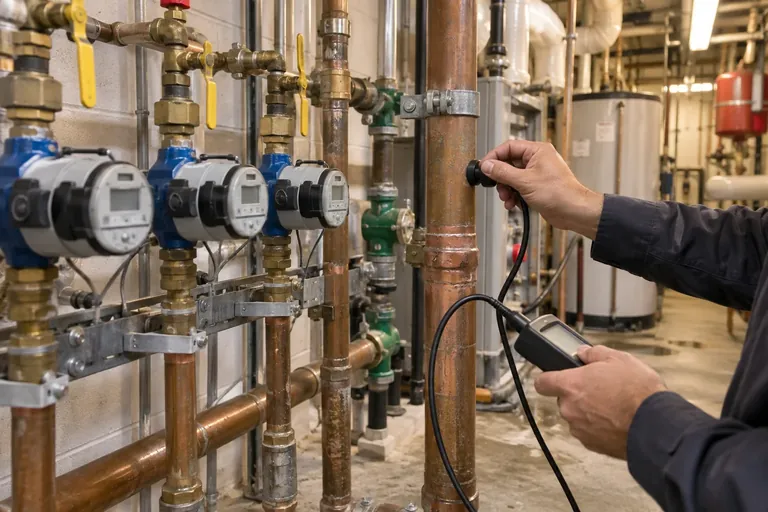
A busy facility needs more than a single meter reading
The EPA's WaterSense guidance recommends tracking meters and submeters, investigating usage spikes, and looking for leaks in cooling towers, boiler systems, restrooms, and irrigation. For Midland facilities, a clean comparison is often the lowest-occupancy period against a normal operating period. We also note cleaning shifts, process water, and outdoor watering so ordinary demand is not called a leak.
Hotels and multifamily
Room fixtures, laundry, water heaters, and irrigation can create overlapping signals. Submeter and valve maps reduce guesswork.
Restaurants and retail
Restrooms, kitchen equipment, ice makers, and hidden supply runs need different isolation windows to avoid interrupting service.
A facility-friendly investigation sequence
Baseline
Confirm the bill and meter trend against occupancy, schedules, irrigation, and process use.
Zone map
Locate valves and submeters; identify which systems can be isolated without stopping critical operations.
Targeted test
Use visual, acoustic, moisture, or pressure checks matched to the suspected line or room.
Decision record
Summarize findings, uncertainty, repair access, and a practical schedule for the facilities team.
When overnight flow persists
If an office shows steady overnight flow with the irrigation timer off, check equipment such as the cooling-tower make-up valve. A valve that does not close fully can mimic a buried domestic main leak; isolate the zone before excavation is proposed.
A useful handoff
Facility managers should receive the meter or submeter evidence, tested zones, observed conditions, likely source, recommended next test or repair, and any operational constraints.
Best-practice reference
EPA WaterSense guidance for facilities recommends meter/submeter tracking, leak alerts, and routine inspection of water-using equipment.
Commercial leak planning questions
Start with your meter data and operating schedule.
Speak with us about the building, the usage change, and a practical inspection window for your team.
Call (432) 263-5094